

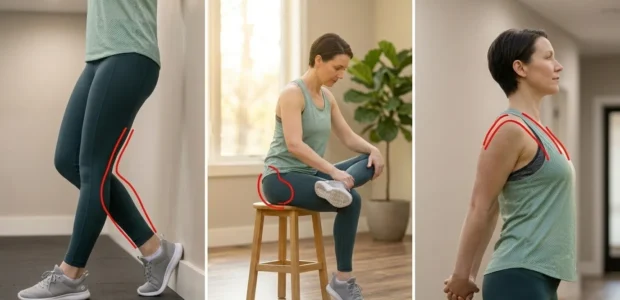

Be honest for a moment, how many hours have you spent sitting today?
Maybe you started your morning at your desk, sat through a few meetings, drove to run errands, and then relaxed on the couch in the evening. Before you know it, you’ve been sitting for most of the day. And while it might feel harmless, your body notices every hour you stay in the same position.
If you’ve ever stood up after a long work session and thought, “Why are my hips so tight?” or “Why does my lower back hurt when I haven’t even done anything strenuous?”—you’re not alone.
You don’t need an intense workout to undo some of the damage. A few targeted stretches can make a remarkable difference.
The key is to stretch the muscles that sitting affects the most; your hips, glutes, chest, neck, back, and hamstrings. When you restore movement to these areas, your body feels looser, your posture improves, and everyday activities become more comfortable.
Let’s start with the stretch that physical therapists consider the most important.
1. Hip Flexor Stretch
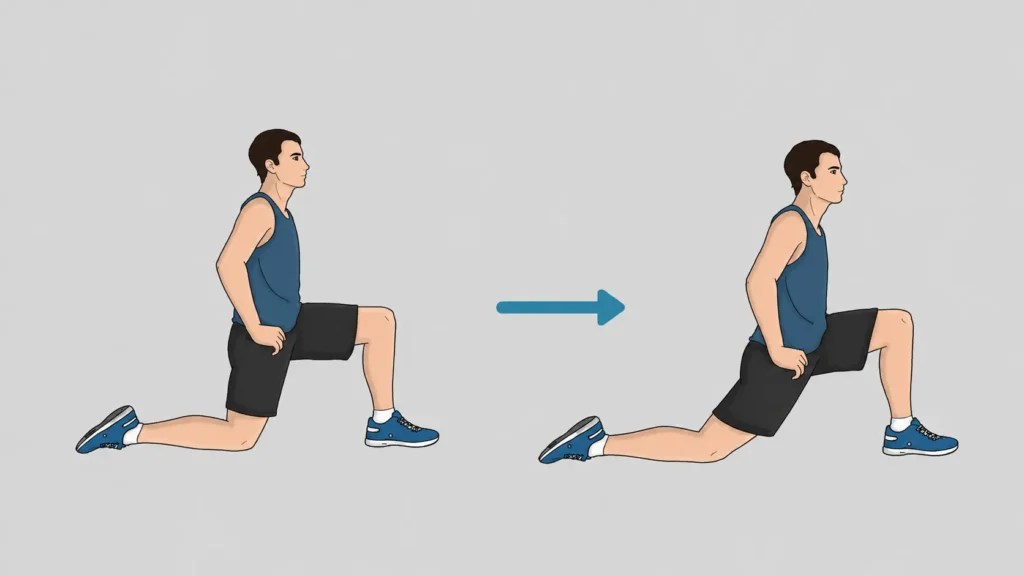
If I had to recommend just one stretch after sitting all day, this would be it.
Here’s why.
When you sit for hours, your hip flexors, the muscles at the front of your hips remain in a shortened position. Over time, they become tight and stiff. That’s one of the biggest reasons people experience hip discomfort, poor posture, and even lower back pain.
The solution is surprisingly simple.
Step into a lunge position with one foot forward and the other knee on the floor. Keep your chest upright and gently push your hips forward until you feel a stretch in the front of your hip.
Don’t force it.
Hold the stretch for 20 to 30 seconds, breathe normally, and repeat on the other side.
This stretch does more than relieve tight hips. It helps your pelvis return to a healthier position, reduces pressure on your lower back, and improves the way you walk and move throughout the day.
And once your hips start to loosen up, you’ll probably notice another area that needs attention, your glutes.
2. Figure-4 Glute Stretch
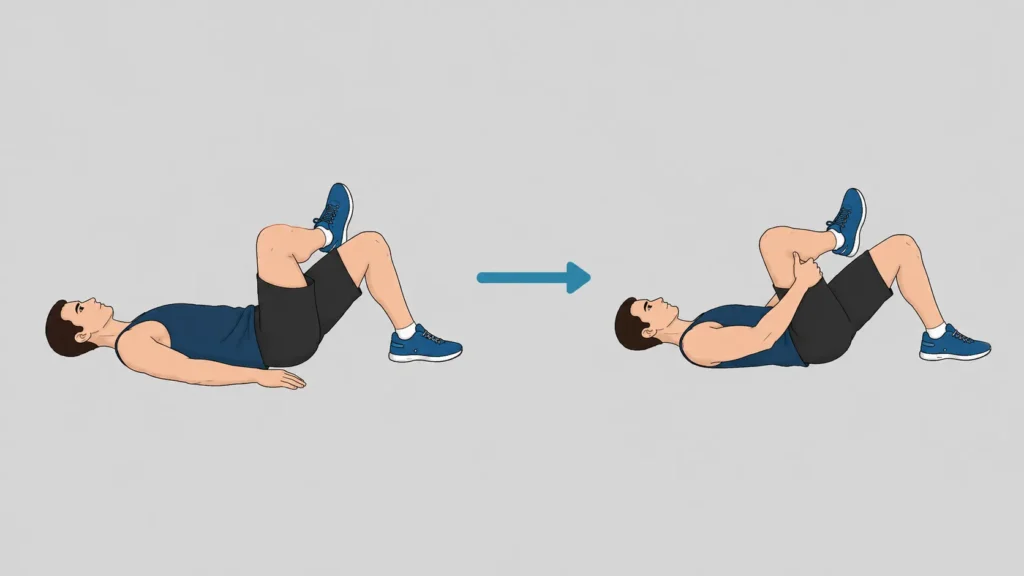
People joke about having “dead butt syndrome,” but there is some truth behind it. When your glutes stay inactive for hours every day, they become weaker and tighter, which can contribute to discomfort in your hips and lower back.
That’s where the Figure-4 stretch comes in.
Sit on a chair and place your right ankle over your left knee, creating a figure-four shape with your legs. Keeping your back straight, lean forward slowly until you feel a stretch deep in your hip and glute.
You shouldn’t feel pain.
Instead, aim for a comfortable stretch that gradually eases the tension.
Stay there for 20 to 30 seconds and switch sides.
You’ll be surprised by how tight this area feels. That’s perfectly normal. This stretch may become one of your favorites because of the immediate relief it provides.
Now that we’ve opened up the hips and glutes, it’s time to look higher up—at your chest and shoulders.
Read More: Benefits of Home Workout
3. Chest Opener Stretch
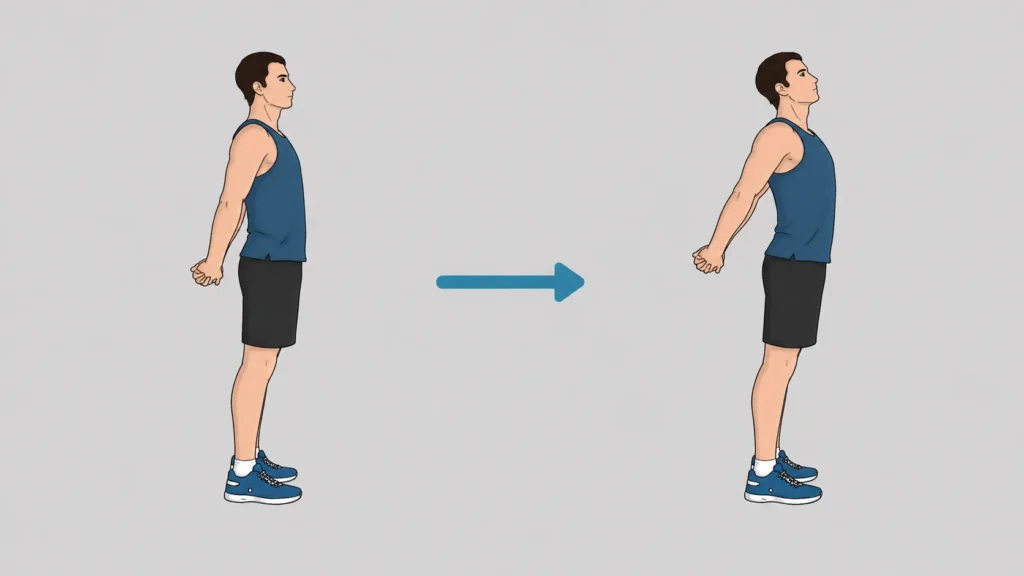
Take a quick look at your posture right now. Are your shoulders rounded forward? Is your head slightly leaning toward the screen?
Most of us unconsciously slip into this position after hours of working on a laptop or looking at our phones.
The problem is that the muscles in the front of your chest become tight, while the muscles in your upper back become overstretched and weak. Over time, this imbalance can lead to shoulder discomfort, neck tension, and poor posture.
A chest opener helps reverse that pattern.
Stand tall and clasp your hands behind your back. Gently straighten your arms and lift your chest while pulling your shoulders back and down.
You don’t need to force your arms high.
The goal is simply to open the front of your body and create space across your chest.
Take a few deep breaths here.
You’ll notice, your breathing feels easier when chest isn’t collapsed forward. That’s because posture and breathing are connected. Once your shoulders relax, you’ll probably feel tension lingering in another familiar area.. your neck.
4. Neck Stretch
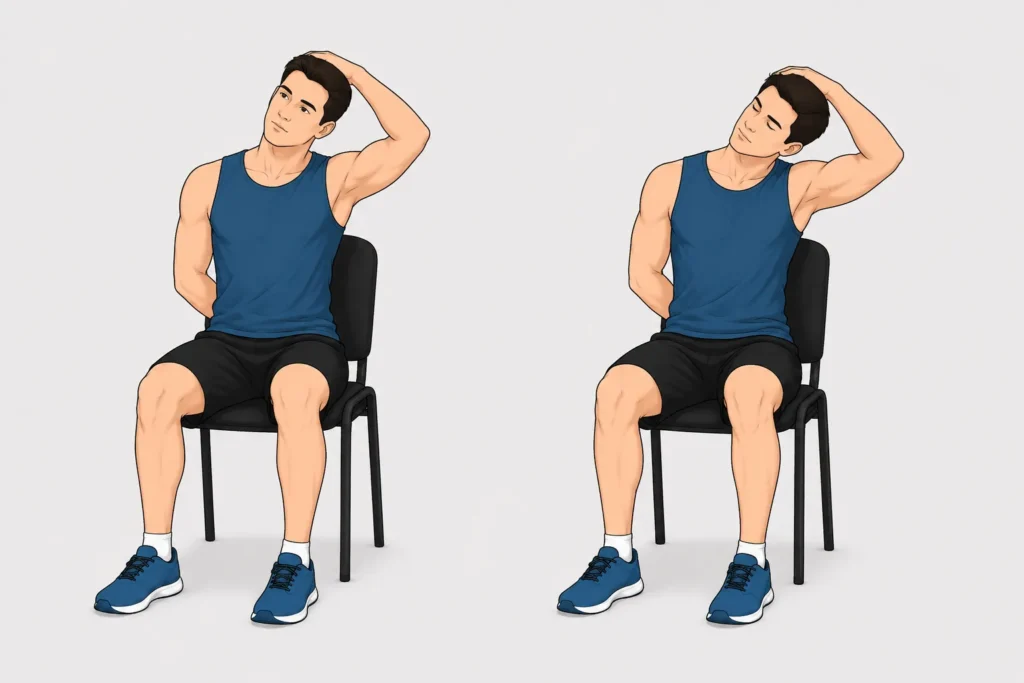
Your neck isn’t designed to hold your head in a forward position for hours. Yet that’s exactly what happens when you’re focused on a computer screen.
Over time, the muscles on the back of the neck become strained, while other muscles become tight and overworked.
The fix doesn’t have to be complicated. Sit upright and slowly tilt your head toward one shoulder. You should feel a gentle stretch along the opposite side of your neck.
Hold it.
Breathe slowly.
Then repeat on the other side.
Avoid pulling aggressively or forcing the movement. Neck stretches should feel gentle and controlled.
Done regularly, they can reduce stiffness, improve mobility, and even help relieve tension headaches caused by poor posture.
And once your neck feels better, you’ll want to restore movement to the center of your body.. the spine.
5. Seated Spinal Twist
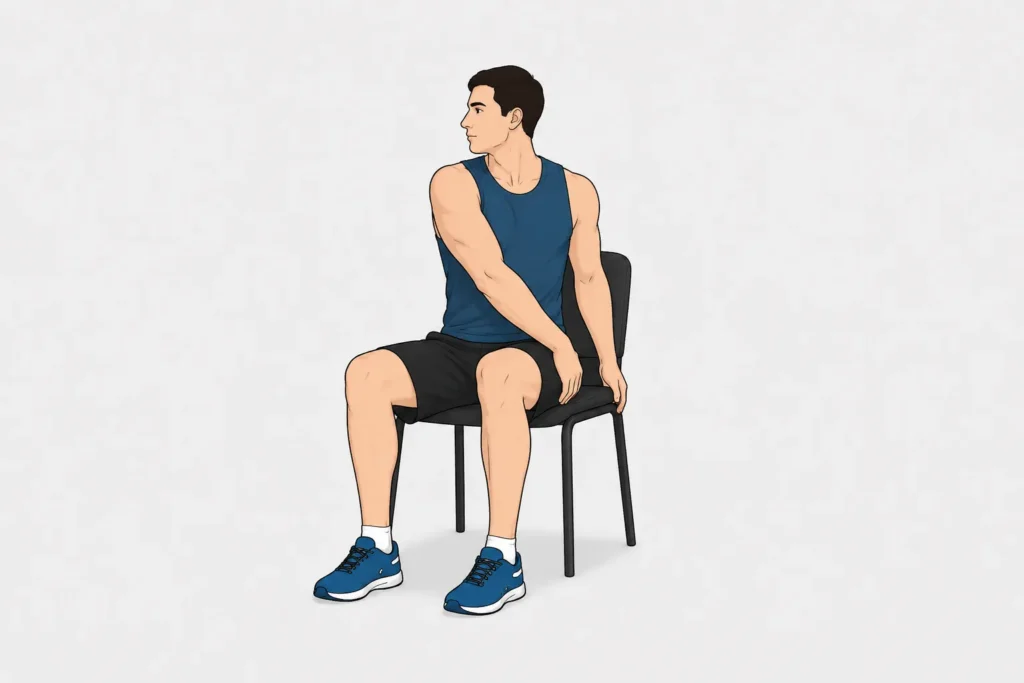
Your spine loves movement. It bends forward, backward, sideways, and rotates. The problem is that when you sit for hours, your spine barely moves at all.
That’s why you’ll feel stiff when they stand up after a long period. A seated spinal twist helps bring that movement back.
Sit upright on a chair with both feet flat on the floor. Place your right hand on the outside of your left knee and gently rotate your torso to the left.
Don’t try to twist as far as possible. Think of it as creating a comfortable rotation while keeping your breathing relaxed.
Hold for 20 to 30 seconds, then switch sides.
This simple movement can leave your back feeling noticeably freer, especially after a long workday. And if your lower back still feels compressed, the next stretch can help even more.
Read More: Best Workout Equipment for Home
6. Standing Back Extension
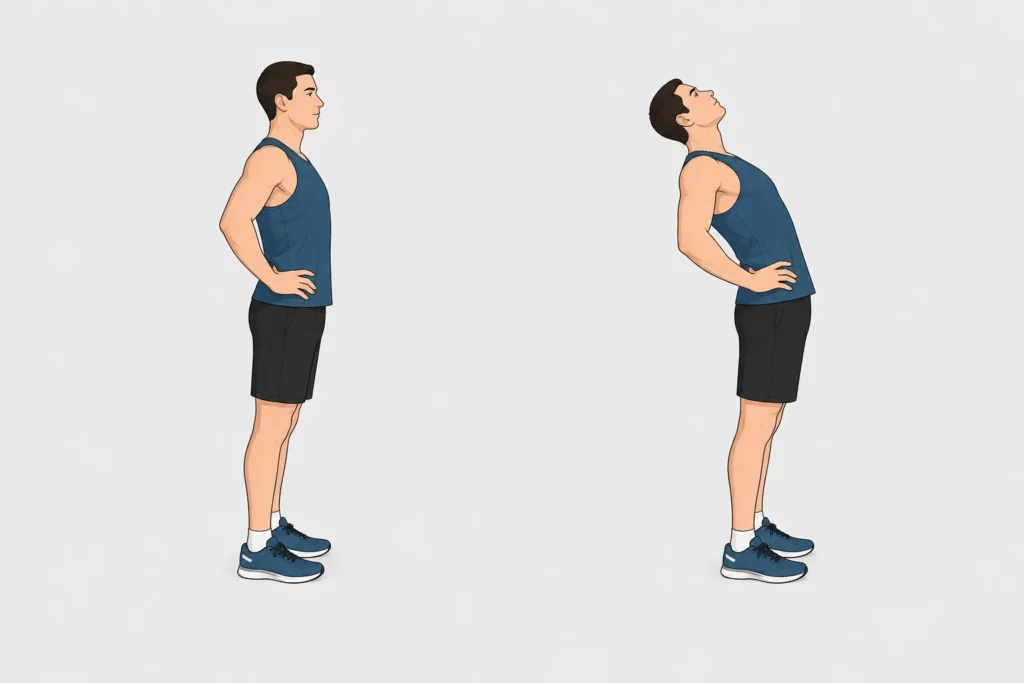
Stand with your feet shoulder-width apart and place your hands on your lower back for support. Slowly lean backward, lifting your chest toward the ceiling while keeping your movements controlled.
You don’t need to bend very far. Even a gentle extension can feel incredibly relieving after a day at your desk. Hold the position for a few seconds, return to the starting position, and repeat several times.
This stretch helps restore the movement your spine misses while sitting. Many people describe it as the stretch that instantly makes their back feel “unstuck.”
Let’s move to one of the most overlooked areas affected by prolonged sitting.. your hamstrings.
7. Hamstring Stretch
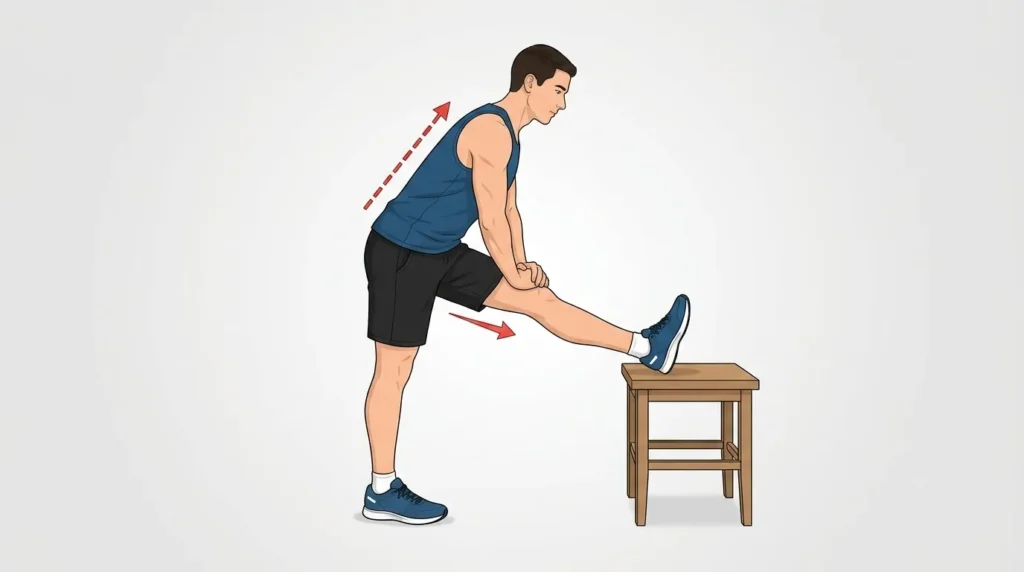
Your hamstrings work closely with your hips and lower back. When they become tight, they can limit your movement and contribute to stiffness that you feel throughout your entire lower body.
A simple standing hamstring stretch is enough to help. Place one heel on a low step or stool and keep your leg straight. With your back flat, gently lean forward from your hips until you feel a stretch along the back of your thigh.
Notice something important here; you are hinging from your hips, not rounding your back. That’s what allows you to stretch the muscle safely and effectively.
Hold the position for 20 to 30 seconds and repeat on the other side.
If the stretch feels intense, don’t worry. That’s common, especially if you’ve been spending most of your day sitting. With consistency, your flexibility will improve, and you’ll likely notice less tension in your hips and lower back as well.
Now there’s just one more area we shouldn’t ignore.
8. Standing Calf Stretch
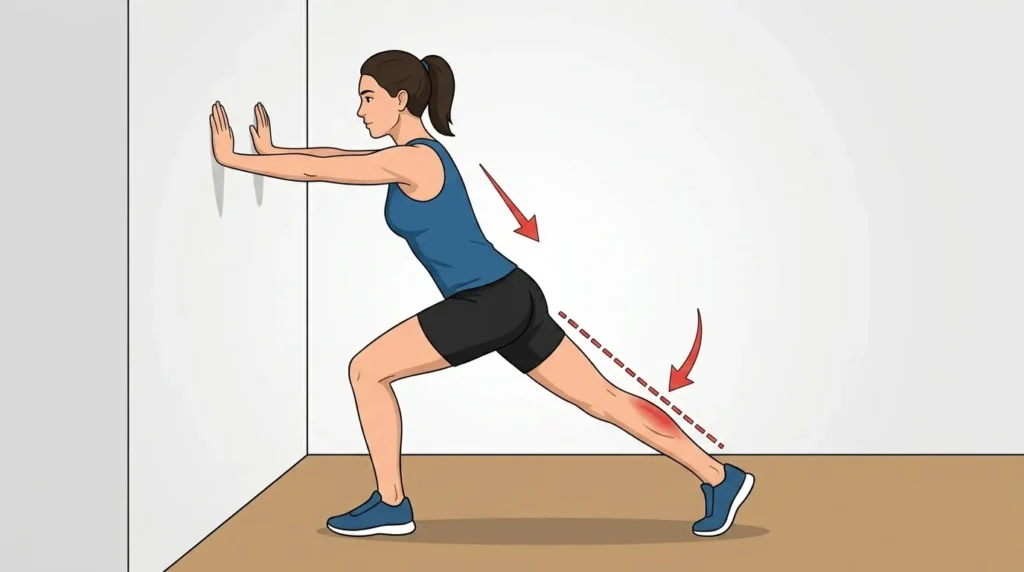
Long periods of inactivity can reduce ankle mobility and affect circulation in your lower legs. That’s one reason your legs may sometimes feel heavy or stiff after sitting for several hours.
Fortunately, a calf stretch is simple and effective.
Stand facing a wall and place your hands against it for balance. Step one foot back, keeping the heel firmly on the floor and the back leg straight.
Lean forward slightly until you feel a stretch in your calf.
Hold it. Take a few deep breaths. Then switch sides.
This stretch improves ankle mobility, promotes better circulation, and helps your legs feel lighter and more relaxed.
How Long Should You Stretch After Sitting?
Five to ten minutes of stretching is enough for most people. The goal isn’t to turn stretching into another demanding task on your to-do list. The goal is to give your body its agility back.
Remember, consistency matters far more than intensity. Stretching for a few minutes every day is much more effective than doing an hour-long session once every two weeks.
Tips to Avoid the Effects of Sitting All Day
Stretching is incredibly helpful, but the best strategy is to avoid staying still for too long in the first place.
If you work at a desk, try standing up every 30 to 60 minutes.
- Walk while taking phone calls.
- Take the stairs instead of the elevator when possible.
- Even a two-minute walk to refill your water bottle counts.
Some health experts call these small breaks “movement snacks” because they’re short, easy to fit into your day, and surprisingly effective.
You don’t have to become a fitness enthusiast overnight. You simply need to remind your body that it was designed to move. And the more you do that, the better you’ll feel.
Final Thoughts
Modern life makes sitting almost unavoidable. We sit while working. We sit while driving. We sit while watching TV and scrolling on our phones.
But sitting itself isn’t the enemy. Staying in the same position for hours without moving is what creates problems.
That’s why a simple stretching routine can make such a big difference.
By focusing on your hip flexors, glutes, chest, neck, spine, hamstrings, and calves, you can help your body recover from the effects of prolonged sitting. Just a few minutes of stretching each day can improve your posture, increase mobility, and leave you feeling more comfortable throughout the day.
Just start where you are and stay consistent. Over time, these small habits can have a big impact on how your body feels and moves. And once you understand how powerful consistency can be, the next step is making it easier to stick with it.
Creating a space at home that encourages movement doesn’t have to be expensive or complicated. Sometimes, having the right fitness and wellness essentials within reach is all it takes to stay motivated and turn healthy habits into part of your everyday life.
That’s where Stay Fit Deals can help. From at-home workout equipment and recovery tools to wellness products designed to support an active lifestyle, you can explore carefully selected options that combine quality with value—all in one place.
Frequently Asked Questions
1. Is it better to stretch in the morning or at night?
Both can be beneficial. Morning stretches help wake up stiff muscles, while evening stretches can help release tension built up throughout the day.
2. Should stretching feel painful?
No. A good stretch should create mild tension, not pain. If you feel sharp or intense discomfort, ease off and adjust your position.
3. Can stretching improve my balance?
Yes. Regular stretching can improve joint mobility and muscle coordination, which may help enhance balance and stability over time.
4. Is it okay to stretch every day?
Absolutely. Gentle stretching can be done daily and is a great way to maintain flexibility and keep your body moving comfortably.
5. Should I stretch if my muscles are sore after exercise?
Light stretching may help you feel more relaxed, but avoid forcing tight or sore muscles. Gentle movements are the safest approach.