

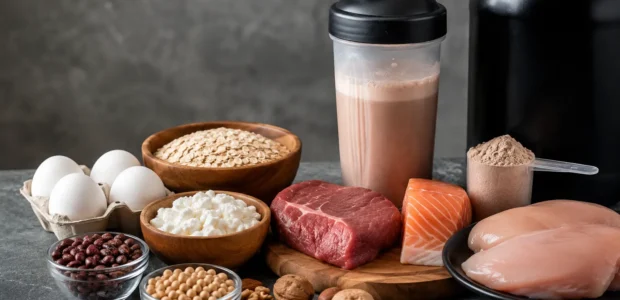

Whether you’re lifting weights, training for a sport, or simply trying to stay active, recovery is just as important as the workout itself. Every time you exercise, your muscles experience stress. That stress is what makes them stronger, but only if your body has the nutrients it needs to repair the damage. That’s where protein comes in.
You’ve probably heard someone recommend a protein shake after a workout or tell you to eat more protein if you want to build muscle. While there’s some truth to that, the relationship between protein and muscle recovery is more than a post-workout trend. Protein provides the amino acids your body needs to repair damaged muscle tissue, support recovery, and prepare you for your next workout.
Whether your goal is to gain strength, improve endurance, or recover faster between training sessions, understanding how protein for muscle recovery and growth works can help you make better nutrition choices. Let’s start with what actually happens inside your body after you exercise.
What Happens to Your Muscles After Exercise?
When you push your muscles during exercise—especially strength training—you create tiny tears in the muscle fibers. It sounds serious, but it’s completely normal. These microscopic tears are actually the first step toward getting stronger.
After your workout, your body gets to work repairing the damaged tissue. During this process, it replaces old or damaged muscle proteins with new ones, making the muscles slightly stronger than before. Over time, this cycle of stress and repair is what leads to improved strength, endurance, and muscle growth.
But your body can’t rebuild muscle out of thin air. It needs raw materials, and that’s exactly what protein provides.
When you eat protein-rich foods, your digestive system breaks them down into amino acids. These amino acids travel through your bloodstream and are delivered wherever your body needs them most. After exercise, your muscles become especially responsive to these nutrients because they’re in repair mode.
One amino acid, called leucine, plays a particularly important role. It acts like a signal that tells your body it’s time to start building new muscle proteins. Foods such as eggs, dairy, fish, lean meat, and soy are naturally rich in leucine, making them excellent choices after a workout.
Recovery isn’t only about rebuilding muscle, though. Your body is also restoring energy stores, reducing inflammation, and adapting to the physical demands of your training. This is why protein and recovery go hand in hand. The better your recovery, the better prepared you’ll be for your next workout.
Read More: Best Workout Equipment for Home
Does Protein Help Muscle Recovery? How Much Protein Do You Need for Muscle Recovery?
According to the International Society of Sports Nutrition, people who exercise regularly should aim for 1.4 to 2.0 grams of protein per kilogram of body weight each day to support muscle repair, recovery, and growth. For someone weighing 70 kilograms (154 pounds), that’s roughly 98 to 140 grams of protein daily. To hit these exact targets without the guesswork, use a macrofactor discount code to get a premium nutrition tracker for less.
Just as important as how much protein you eat is how consistently you eat it. Instead of consuming most of your daily protein in one large meal, spreading it across breakfast, lunch, dinner, and snacks helps your muscles receive a steady supply of amino acids throughout the day.
Research also suggests that consuming 20 to 40 grams of high-quality protein after exercise can effectively stimulate muscle protein synthesis. The exact amount depends on factors like your body size, age, and training intensity, but the takeaway is simple: you don’t need an enormous protein shake to support recovery.
It’s also worth remembering that protein doesn’t work in isolation. Your workout provides the stimulus for muscle growth, while protein provides the building blocks needed to repair and strengthen those muscles.
Without exercise, simply increasing your protein intake won’t magically build muscle. On the other hand, training hard without eating enough protein can slow recovery and make it harder to see progress.
Simple Ways to Speed Up Recovery
Protein plays a major role in recovery, but it’s only one piece of the puzzle. If you want to recover faster and perform better, build healthy habits around your training.
Here are a few simple strategies that make a real difference:
- Eat enough protein every day. Your total daily intake has a greater impact than a single post-workout meal.
- Don’t skip carbohydrates. They restore energy levels and work alongside protein to support recovery.
- Stay hydrated. Even mild dehydration can affect muscle function and slow recovery.
- Prioritize sleep. Much of your body’s repair work takes place while you sleep, making quality rest just as important as good nutrition.
- Give your muscles time to recover. Training hard every day without adequate rest can increase fatigue and limit progress.
When these habits come together, protein and recovery become part of a complete strategy rather than a standalone solution.
Common Myths About Protein and Muscle Recovery
There’s no shortage of nutrition advice online, but not all of it is backed by science. Let’s clear up a few common myths.
Myth 1: The More Protein You Eat, the More Muscle You’ll Build
Muscle growth depends on progressive training, adequate calories, recovery, and protein. Eating far more protein than your body needs won’t automatically speed up the process.
Myth 2: You Must Drink a Protein Shake Immediately After Your Workout
The so-called “anabolic window” isn’t as narrow as many people believe. While eating protein after exercise is a good idea, your overall daily protein intake has a much greater impact on recovery than consuming it within a few minutes of finishing your workout.
Myth 3: Only Athletes Need Extra Protein
Anyone who exercises regularly can benefit from meeting their protein needs. Whether you’re strength training, cycling, swimming, or simply trying to stay active, protein supports your body’s natural repair process.
Myth 4: Plant Proteins Aren’t Effective
Plant-based diets can absolutely support muscle recovery. As long as you’re eating enough total protein and including a variety of protein-rich foods, your muscles can recover and grow just as effectively.
Conclusion
Protein is one of the most important nutrients for muscle recovery, but it’s most effective when it’s part of a well-rounded approach to fitness. Pairing adequate protein intake with consistent training, quality sleep, proper hydration, and balanced nutrition gives your body the support it needs to repair muscle tissue, adapt to exercise, and come back stronger.
If you’re looking to stock up on protein powders, ready-to-drink protein shakes, or other workout supplements, Stay Fit Deals.com can help you save while supporting your fitness goals. Instead of searching multiple retailers for the best prices, the platform brings together verified discounts, coupons, and special offers on popular fitness products in one place.
Whether you’re buying your first protein powder for muscle recovery or restocking your favorite supplements, you can compare deals, access exclusive savings, and find quality products at more affordable prices—making it easier to invest in your recovery without overspending.
Frequently Asked Questions
Can protein help muscle soreness?
It may help reduce soreness indirectly by supporting muscle repair, but it isn’t a cure for delayed onset muscle soreness (DOMS). Sleep, hydration, and proper training all play important roles as well.
Is protein powder better than whole foods?
Not necessarily. Whole foods provide protein along with vitamins, minerals, and other nutrients. Protein powder is simply a convenient option when it’s difficult to meet your daily protein requirements through food alone.
What’s the best protein for muscle recovery?
There’s no single “best” choice. High-quality sources such as eggs, dairy, lean meat, fish, soy, and well-formulated plant-based proteins all support muscle recovery when they fit into a balanced diet.